Dangers of Prescription Drug Abuse
Prescription drug abuse is steadily worsening because as more pain, anxiety, or attention deficit disorder medications are disbursed for legitimate purposes, many are being diverted to sales on the street for profit. The prescription pill business is big business on the street with a vast amount of collaboration between users, dealers, and doctors. The rapid rise in “pill mills”, internet sales, and other illicit acquisitions makes it easy for anyone to obtain highly addictive prescription drugs for abuse.
Types of Prescription Drugs Abused
We spent a lot of time worrying about heroin addictions in the past, now, we have much larger problem with prescriptions drugs and no end in sight for the abuse of them. According to the National Institute on Drug Abuse, “In 2010, approximately 7.0 million persons were current users of psychotherapeutic drugs taken non-medically (2.7 percent of the U.S. population).”
The most widely abused and addictive prescription drugs are:
- Narcotic pain relievers – opiates or opiate derivatives
- CNS stimulants – including amphetamines prescribed to treat ADD, ADHD, and narcolepsy
- CNS depressants – Tranquilizers and sedatives, such as benzodiazepines or barbiturates, prescribed to treat of anxiety, panic disorders, sleep, or other psychological disorders.
Dangers of Narcotic Pain Relievers
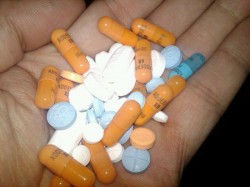
There are several different types of prescription drugs which are abused all too often.
Like heroin, opiate painkillers are highly addictive both physically and psychologically. Opiates act as CNS depressants and affect every part of the person’s body. There is a high potential for overdose on these drugs as they slow down the respiratory and cardiovascular system. With repeat or prolonged use, the person’s health deteriorates and they become psychologically impaired. Opiate abusers will often engage in dangerous or criminal behaviors and IV users risks diseases such as HIV or AID’s.
Dangers of CNS Stimulants
CNS stimulants are often prescribed to children for ADD or ADHD and they are often obtained by other family members who abuse them with the misconception that they are safe. Prescription stimulants affect the CNS system and can speed up processes that make them dangerous. Amphetamines can produce similar effects to cocaine and they can be just as addictive and deadly when used in high frequencies or amounts. They have detrimental effects on the central nervous system, impairing the brain, the heart, the lungs, and other organs. Increasingly, CNS stimulants are responsible for overdoses, seizures, and sudden cardiac death.
Dangers of CNS Depressants
CNS depressants slow down activity in the brain and central nervous system which controls every other system in the body. Decreased respiration, heart rate, and blood pressure can be fatal. CNS depressants are often prescribed to treat acute anxiety, panic, and other psychological disorders and abuse can lead to serious physical and psychological problems. There is a high risk of overdose when these drugs are combined with other CNS depressants such as opiates or alcohol. Users risk brain damage, coma, seizures, stroke, and other fatal dangers from CNS depressant abuse.