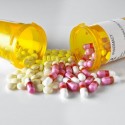
The worst recipe for violence … just mix alcohol and Valium
Mixing Valium and alcohol is the most potent mix for committing violent offences, according to new research commissioned by the Scottish Prison Service.
A study of 16 and 17-year-old boys at Polmont Young Offenders Institution found that many of them had committed their offences because they had taken diazepam and alcohol together.
They said it had the added advantage of making them forget the violence they had instigated.
It also found that almost three quarters of the young men interviewed had some experience of the Children’s Hearing System and the common view was that it made “little or no difference” to their offending.
The report states: “There was a consistent view that alcohol, and alcohol in conjunction with diazepam, was a significant contributor to offending. A number identified that the particular combination of alcohol and diazepam had led to them committing violent offences about which they had no recollection.”
It suggests, too, that for some young men diazepam is becoming more of a problem than heroin.
It was also suggested that there may be a need for awareness raising among GPs about the issues posed by prescribing diazepam to some young people, and particularly about the ways in which the drug is being used by young people.
It was noted by the drug support charity Phoenix that their workers see more young offenders with problems relating to diazepam than those with problems relating to heroin.
“It is clear that the combination of alcohol and diazepam was a factor in some of the most serious violent offences reported in this research, with the added factor that none of the young offenders concerned had any memory of the incident,” the report adds.
One young offender said: “I knew that drinking and diazepam made me want to fight, but it didn’t make a difference”.
Another noted that this combination “made me feel invincible”.
The study conducted by Sheila Reid and Brian Henderson of Reid Howie Associates, recommends that: “At a national and local level, the Scottish Government could consider carrying out work designed to educate young people about the risks of alcohol-related violence, and particularly about mixing alcohol and diazepam.”
The researchers found that 16 and 17 year olds only made up a quarter of Polmont’s overall population but had committed a disproportionately high level of violent offences.
They interviewed more than 35 young offenders and found that many of them felt “no-one had bothered” with them at school. More than 90% of the young offenders interviewed said most of their friends were also involved in offending and around a quarter blamed their friends for their criminal behaviour. Some had been in gangs.
Only a quarter had participated in education programmes at Polmont.
Dr Alasdair Forsyth, of the Glasgow Centre for the Study of Violence at Glasgow Caledonian, said: “One of my greatest concerns is that Valium’s half life is 100 hours so you could take it on Wednesday and go out on Friday and it is still in their system. A lot of prisoners say that mixing Valium and alcohol makes them violent.
“There is so much work on drug and alcohol education but Valium is largely ignored.
“It is a Class C drug yet it is far worse than Ecstasy, particularly when mixed with alcohol.”
source: http://www.heraldscotland.com