A National Directory of Drug Treatment Centers and Alcohol Treatment Centers, Therapists and Specialists. A free, simple directory providing assistance and guidance for those seeking help regarding alcohol addiction, drug addiction, dependency and many other conditions that affect the mind, body and soul.
Call
888-647-0579
to speak with an alcohol or drug abuse counselor.
Who Answers?
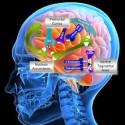
What is ADHD
ADHD is Attention Deficit Hyperactivity Disorder. It is a neurobehavioral disorder that affects generally about 5% of the total population of the world below the age of 19 years. Its onset is usually seen during the childhood that is marked by impulsivity, hyperactivity, forgetfulness and distractibility. It becomes apparent in children during the preschool years and early school years.
Some signs of ADHD are as follows: feeling restless, giving away the answers before listening to the complete question, face difficulties to take turns or wait in a line, running away from the situations where quiet behavior is expected.
ADHD is diagnosed by the skilled professionals like the psychologists, psychiatrists, clinical social workers and developmental pediatricians. There are effective treatments available for the treatment ADHD. The most effective medicines are termed as the stimulants and these include Focalin, Dexedrine, Dextrostat, Ritalin, etc. these medicines, however are associated with certain side effects. But these side effects are temporary and they disappear after a period of time.
ADHD is a very common disorder affecting school-age children. Boys are three times more likely to be affected by it than the girls. The children suffering from ADHD act without thinking, they are hyperactive and have difficulty in focusing anything. They are unable top pay attention, sit still for a moment or attend to the details. Thus, the child’s ability to function socially and academically is impaired.
But, fortunately there are better treatment options available nowadays so that the children with ADHD can live successfully and mange their symptoms.
A school governor has called for a ban on parents drinking alcohol while waiting to pick up their children outside school. Arthur Mitchell, chairman of Doncaster Road Primary School’s board of governors in Barnsley, South Yorkshire, said a street drinking ban had been proposed after police received reports that parents had been seen drinking at….
Ministers battling to beat Scotland’s addiction to drink and drugs will unveil a radical shake-up of rehabilitation today. They are to disband Scotland’s 11 Alcohol and Drug Action Teams and create 32 local authority teams. Following a damning critique of efforts to reduce the harm caused by alcohol and drugs by Audit Scotland last month,….
The decision to seek treatment is a tough decision to make but the challenge doesn’t end there. Once you have opted to seek help there are a number of challenges that surround you such as trying to find the best type of treatment and choosing between various treatment centers that provide a range of services….
Jennifer Vanlieu was addicted to heroin and painkillers for some time before she found a methadone clinic that could help her beat the drug addiction and hopefully get her life back on track. What she didn’t know was that her decision to use methadone as a means of transitioning from being addicted to heroin to….
The head of an Austin organization working on homelessness included this caveat when she sent me her group’s thought-provoking new study on homelessness and alcoholism: “These concepts, unfortunately, could easily end up as fodder for those interested in ‘shock-jock’ type of reporting,” Helen Varty, executive director of Front Steps, said in her e-mail. “That is….