Nepal-born scholar in alcoholism neuroscience breakthrough
Finding could spawn novel ways to treat alcoholism, epilepsy
A team of researchers, with Nepali-born Prafulla Aryal as key member, of the Salk Institute of Biological Sciences in La Jolla, California, has located the alcohol-binding site in the brain that could pave the way to a whole new approach to treating alcoholism, drug addiction, abuse-related brain diseases, and epilepsy.
Aryal was born in Jayabageshwari, Kathmandu in 1981 and did his schooling until the fifth grade at Siddhartha Banasthali School. He migrated to the United States in 1991 and is now a US citizen. After receiving undergraduate education from the University of Colorado-Boulder, he joined the PhD program at the University of California-San Diego in 2003. Now a permanent resident of Denver, Colorado, Aryal´s role was instrumental to the finding.
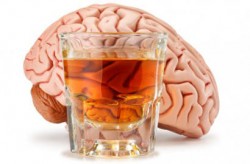
Alcohol in a protein within the brain maybe the cause of alcoholism.
After zeroing in on a potential alcohol-binding site in the brain, Aryal systematically introduced amino acid substitutions to the site to deny alcohol molecules access to the site. After he introduced the substitution, alcohol no longer had its effect, thus confirming that it was indeed the alcohol-binding site in the brain.
The binding-site is not only responsible for the brain´s response to alcohol, but also to epileptic seizures.
The finding by Aryal and his team, published by the Science Daily on Tuesday, is the closest that scientists have reached in understanding how alcohol affects the brain.
With the finding, “it may be possible to develop a drug that antagonizes the actions of alcohol for the treatment of alcohol dependence,” said the Institute in a statement.
Alternatively, if scientists could find a novel drug that fits the alcohol-binding site, this would dampen overall neuronal excitability in the brain and perhaps provide a new tool for treating epilepsy too, the team´s leader Dr Paul A Slesinger, associate professor in the Peptide Biology Laboratory at the Salk Institute, said in the statement.
In an e-mail to myrepublica.com, Aryal said he had been working on the study at Dr Slesinger´s lab at the Salk Institute for the past four years, as part of his thesis work in the field of neuroscience.
“This work shows, for the first time, a direct binding site for alcohol in a protein involved in alcohol´s action in the brain. This is a very novel and significant finding in the field of alcohol research and neuroscience,” Aryal wrote to myrepublica.com in an e-mail.
He further wrote that the finding was significant in that it sheds light on how exactly alcohol acts on the brain to alter its function. “I think, it is a great advancement in our knowledge about alcohol and for scientists that originated from Nepal,” Aryal wrote.
Other members of the research team are Dr Senyon Choe, a professor in the Structural Biology Laboratory, and Dr Hay Dvir, a postdoctoral researcher in Choe´s lab.
This work was supported by National Institute on Alcohol Abuse and Alcoholism and on General Medical Sciences, the HN & Frances Berger Foundation and the Salk Institute for Biological Studies.
The Salk Institute, a not-for-profit organization, was founded by Dr Jonas Salk, who discovered the Polio vaccine and chose to distribute it throughout the world, without proprietary concern, to eradicate the disease.
source: My Republica