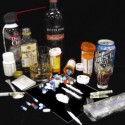
‘I have to walk forward to keep where I am’
Every day starts at step one.
I am powerless over alcohol. With alcohol my life is unmanageable.
For 23 years, Randy has begun his day with the first step of Alcoholics Anonymous’ 12 Step Program.
“I always know I am one moment and one drink away from where I was,” Randy said.
Randy took his first drink at 17.
“It worked for me right away,” he said. “It changed my life. It opened me up. I had fun. It helped me socialize. It helped me be who I wanted to be.”
“When I started, I could really drink. I could drink all night and just get up and go to work in the morning.
“That trigger – the one that tells you this is a poison and makes you sick – it didn’t happen for me.”
When he became old enough to legally drink, he celebrated hard.
“I drank 20 shots of Schnapps and 20 screwdrivers between midnight and 1 a.m.,” Randy recalled.
Eventually alcohol led to other drugs – marijuana for a few years, then harder street drugs.
“For the first decade, drinking and drugging worked well for me,” he said.
By the early ’80s, his life began to unravel.
“I’d have a .30 blood alcohol content and was still walking and driving,” he said.
He was arrested three times on suspicion of drunken driving.
People started talking to him about his use and what it was doing to his life.
He knew they were right.
“I just didn’t know what to do about it,” Randy said.
When his first three DWIs were forgiven under old state statutes, Randy earned three more.
Facing his sixth DWI, Randy was so certain he was going to prison that he tucked a toothbrush in his pocket.
On Dec. 1, 1986, the night before court, he went out drinking. He decided he would kill himself. He told his plan to the man sitting beside him at the bar.
“The man said if you buy me a drink, I’ll tell you how to get help.”
Randy bought him that drink.
The man told him about the Independence Center, a place where alcoholics could come clean. The next morning, Randy walked into a treatment center and was admitted immediately.
“I would not have survived had I not had the safety net of a 30-day inpatient program,” Randy said. “If I was an outpatient, I am pretty sure I would have drank. … If they had told me to come back in two weeks for an evaluation, I firmly believe I’d be dead.
“They talk about courage to surrender. I didn’t have courage to surrender. I was broken to submission by myself.”
Randy says he had an awakening at the Independence Center. For the first time, he started to believe he could survive.
He had been sober for 30 days when he finally went to court for that sixth DWI.
He told the judge:
You have the right to do what you want. But I’m going to stay clean and sober either way. You can lock me up and I’ll try on the inside to stay clean, or you can leave me on the street to do probation and I will stay clean and sober. I’ll do whatever you want me to do. And if I don’t do it, you can lock me up even longer.
The judge sentenced him to four years’ probation.
To this day, “I have held up my end of the bargain,” Randy said.
The years since have been good. Randy is now co-owner of Schwisow Construction, the company he started working at 25 years ago.
He is happy. Successful. Confident. Generous.
Yet every day, he fights his addiction.
“It’s like a down escalator. If I’m not walking up all the time, I’m going down. I have to walk forward to keep where I am at, let alone go forward.”
source: Journal Star