Call
888-647-0579
to speak with an alcohol or drug abuse counselor.
Who Answers?
Treatment & Detox Guide
Co-occurring disorders
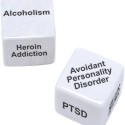
Co-occurring disorders, as the name suggests are the type of disorders that occur again. These disorders are mostly related to mental health problems and therefore the chance of the disorders affecting again is high in the patients who suffer mental imbalance or have self destructive tendencies or are impulsive in their behavior. The co-occurring….
Dual Diagnosis

Dual diagnosis is the co-existence of a mental health disorder and drug addiction or alcoholism. Dual diagnosis also can be co-existence of eating disorder or drug addiction or alcoholism. To recover completely the person will require addiction treatment and psychiatric treatment for both problems. Alcohol and drug problem is common in Dual diagnosis and it….
Just How Long is Long-Term Treatment?
You’ve tried outpatient treatment, you’ve tried inpatient treatment and now you’ve been recommended for “long-term” treatment, but just how long is long-term treatment anyway and what makes it so much more effective than the programs you’ve already tried? Various recent studies have been conducted to come to the conclusion that long-term treatment is often the….
Young drinker backs teen alcohol campaign
Teenager Catherine Woollard will be legally allowed to drink for the first time this week – but, for her, the novelty of alcohol wore off years ago. Set to celebrate her 18th birthday tomorrow, she began drinking at the age of 12 following the sudden death of her grandmother. By the time she was 16,….
Alcohol abuse can damage the brain by decreasing insulin and insulin-like growth factor receptors
Too much alcohol can cause permanent brain damage, such as Wernicke-Korsakoff syndrome, which is largely related to thiamine deficiency. Previous animal studies have shown that alcohol can also cause brain injury and degeneration by inhibiting insulin and insulin-like growth factor (IGF). A new study using postmortem human brain tissue has found that chronic alcohol abuse….