Pain Killers And Stimulants Less Risky Than Cocaine, More Risky Than Marijuana, According To College Freshmen
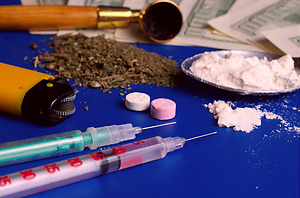
Prescription pain killers has become a serious problem among our youth.
First year college students believe that occasional nonmedical use of prescription pain killers and stimulants is less risky than cocaine, but more risky than marijuana or consuming five or more alcoholic beverages every weekend, according to a new study published in the September issue of Prevention Science, the peer-reviewed journal of the Society for Prevention Research.
This is the first study to describe college students’ perceptions about the potential harmfulness of nonmedical use of prescription pain killers and stimulants. Previous studies with high school students show that beliefs about harmfulness of illicit drugs are related to drug use. Nonmedical use of pain killers and stimulants can be addictive and can cause serious problems requiring emergency room treatment.
The study by Amelia Arria, Ph.D., of the Center for Substance Abuse Research at the University of Maryland, also found that college students who can be described as “sensation-seekers” are more likely to use prescription drugs nonmedically; irrespective of how harmful they may perceive the drugs to be. Arria said “sensation-seekers are students who like novel experiences, who want to try something new and a little dangerous, like jumping off the highest diving board or placing themselves in high-risk situations. They are much more likely to use pain killers nonmedically even if they perceive the drugs to be quite harmful.”
Arria’s study, which was funded by the National Institute on Drug Abuse, also found that students who perceive these drugs as relatively harmless are ten times more likely to use them than those who think that the drugs are extremely harmful.
“This study suggests that educating students about the potential harm that can be caused by nonmedical use of prescription drugs is important in reducing use of these drugs by college students. It also shows that getting the message to students who are sensation-seekers, who are a high risk group for all types of drug use, might be more of a challenge to prevention specialists” Arria said.
Research has shown that sensation-seeking peaks during the late teen years, which raises the possibility that students might become better equipped to make appropriate risk appraisals as they mature into college years. Arria’s paper supports that, based on the fact that for most students, perceived harmfulness may have had an influence on behavior, except among those with higher levels of “sensation-seeking.”
Anecdotal evidence suggests that most college students think it is safe to use prescription drugs nonmedically. This study does not support the anecdotal evidence. It found that among students who had an opportunity to use, two out of three associated a high risk of harm with occasional nonmedical use of prescription pain killers and stimulants.
Previous studies have shown that compared to non-users, those who use prescription pain killers and stimulants for nonmedical purposes tend to be White, male, and have a mother who has a bachelor’s degree or more. They also tend to have greater levels of other drug involvement, are more likely to be affiliated with Greek organizations and have decreased academic performance.
Arria’s research was based on personal interviews, including questions on drug use and sensation-seeking, with 1,253 students. The students also completed a web survey six months after the original interview, and had a follow-up interview at 12 months. The research was conducted between 2004 and 2006 at a large university, with a student body that is typical of state-funded institutions with respect to race, gender and socio-economic status.
Federal government figures show that nationally more than 175,000 emergency room admissions were related to the nonmedical use of pain killers and stimulants in 2005. The numbers are not limited to students alone.
_________
source: mediLexicon, http://www.medilexicon.com